Advanced EPC Solutions for Japan Beverage Wastewater Treatment Projects

プロダクト細部
起源の場所: 中国
ブランド名: CEC TANKS
証明: ISO 9001:2008, AWWA D103 , OSHA , BSCI
モデル番号: W
支払及び船積みの言葉
最小注文数量: 1セット
価格: $5000~$20000 one set
パッケージの詳細: 各 2 枚の鋼板の間に PE ポリフォーム;木製パレットと木製
受渡し時間: 入金受領後10-30日
支払条件: LC、T/T
供給の能力: 月60セット

詳細情報

起源の場所 中国 ブランド名 CEC TANKS
証明 ISO 9001:2008, AWWA D103 , OSHA , BSCI モデル番号 W
タンク本体色: ダークグリーン /カスタマイズできます 腐食の完全性: 素晴らしい
鋼板の厚さ: 3mm〜12mmは、タンク構造によって異なります 耐薬品性: 素晴らしい
パネルのサイズ: 2.4m * 1.2m お手入れ簡単: 滑らかで光沢のある、不活性、吸血
ハイライト:

EPC wastewater treatment Japan

,

Beverage wastewater treatment solutions

,

Japan wastewater treatment project

製品説明

Advanced EPC Solutions for Japan Beverage Wastewater Treatment Projects


As a global leader in beverage innovation, Japan is home to a sophisticated market ranging from specialized functional teas and soft drinks to world-class breweries. However, Japan’s commitment to environmental harmony and the "Basic Act on Establishing a Sound Material-Cycle Society" places significant responsibility on manufacturers.

For Japanese beverage producers, integrating advanced wastewater management is essential for maintaining brand reputation and regulatory standing. Partnering with an expert EPC Contractor for high-performance Beverage Wastewater Treatment Projects has become the industry standard for achieving sustainable growth.


Environmental Policies and Wastewater Challenges in Japan

In Japan, industrial effluent is strictly controlled by the "Water Pollution Prevention Act." The Ministry of the Environment (MOE) sets stringent national uniform effluent standards, while local prefectures often implement even tougher "Add-on Standards" to protect specific water bodies like Tokyo Bay or the Seto Inland Sea.

The Japanese beverage sector operates under unique regulatory pressures:


Total Pollutant Load Control System (TPLCS): In closed water bodies, the total amount of Chemical Oxygen Demand (COD), Nitrogen, and Phosphorus is regulated, requiring ultra-high efficiency in treatment.


Strict Resource Recovery Mandates: Japanese policy strongly encourages the "3Rs" (Reduce, Reuse, Recycle). Transitioning from traditional aerobic treatment to energy-recovering anaerobic digestion aligns with Japan's "Green Growth Strategy."


Space Constraints: Many Japanese facilities are located in dense industrial zones where land is at a premium, demanding compact and highly efficient wastewater infrastructure.


Sources and Characteristics of Beverage Wastewater Generation

Wastewater in the beverage industry is a byproduct of high-intensity production and sanitation. Understanding its generation is critical for system design:


Production and Formulation: Accidental spills, product changeovers, and equipment rinsing introduce high concentrations of sugars, syrups, and organic extracts.


Cleaning and Sanitation (CIP): Rigorous Clean-In-Place cycles involve acidic and alkaline detergents, leading to highly fluctuating pH levels and chemical loads.


Raw Material Processing: The initial washing of botanical ingredients or fruits releases organic solids and natural carbohydrates into the waste stream.


Packaging Operations: Bottle washing and container rinsing generate significant liquid volumes containing residual product and label adhesives.


Integrated Beverage Wastewater Treatment Process

Center Enamel, serving as a premier EPC Contractor, designs turnkey systems that follow a proven multi-stage process:


Pre-treatment: Fine screening and grit removal eliminate suspended solids to protect high-rate reactors.


DAF Separation: Dissolved Air Flotation units remove residual oils and fats common in coffee or dairy-based beverages.


Flow Equalization: A regulating tank balances the chemical composition and temperature for biological stability.


Anaerobic Core: The heart of the project where high COD/BOD levels are drastically reduced, and organic matter is converted into valuable biogas.


Aerobic Polishing: Final treatment stages ensure the effluent meets Japan’s strict municipal sewer or surface water discharge limits.


Advanced Anaerobic Technologies: CSTR, UASB, USR, and IC

Efficiency hinges on the core reactor technology. Center Enamel specializes in four primary anaerobic processes:


CSTR (Continuous Stirred Tank Reactor): Excellent for high-solid wastes like fruit pulp or tea dregs, ensuring a homogeneous environment via mechanical stirring.


UASB (Upflow Anaerobic Sludge Blanket): A high-rate liquid-phase solution that achieves superior organic removal within a compact footprint.


USR (Upflow Solids Reactor): Specifically engineered for waste streams with high suspended solids (SS), ensuring complete organic breakdown.

IC (Internal Circulation) Reactor: A "next-generation" reactor featuring internal circulation for extremely high organic loading rates, perfect for Japan’s large-scale industrial breweries.


The Excellence of GFS Tanks in Japan’s Industrial Landscape

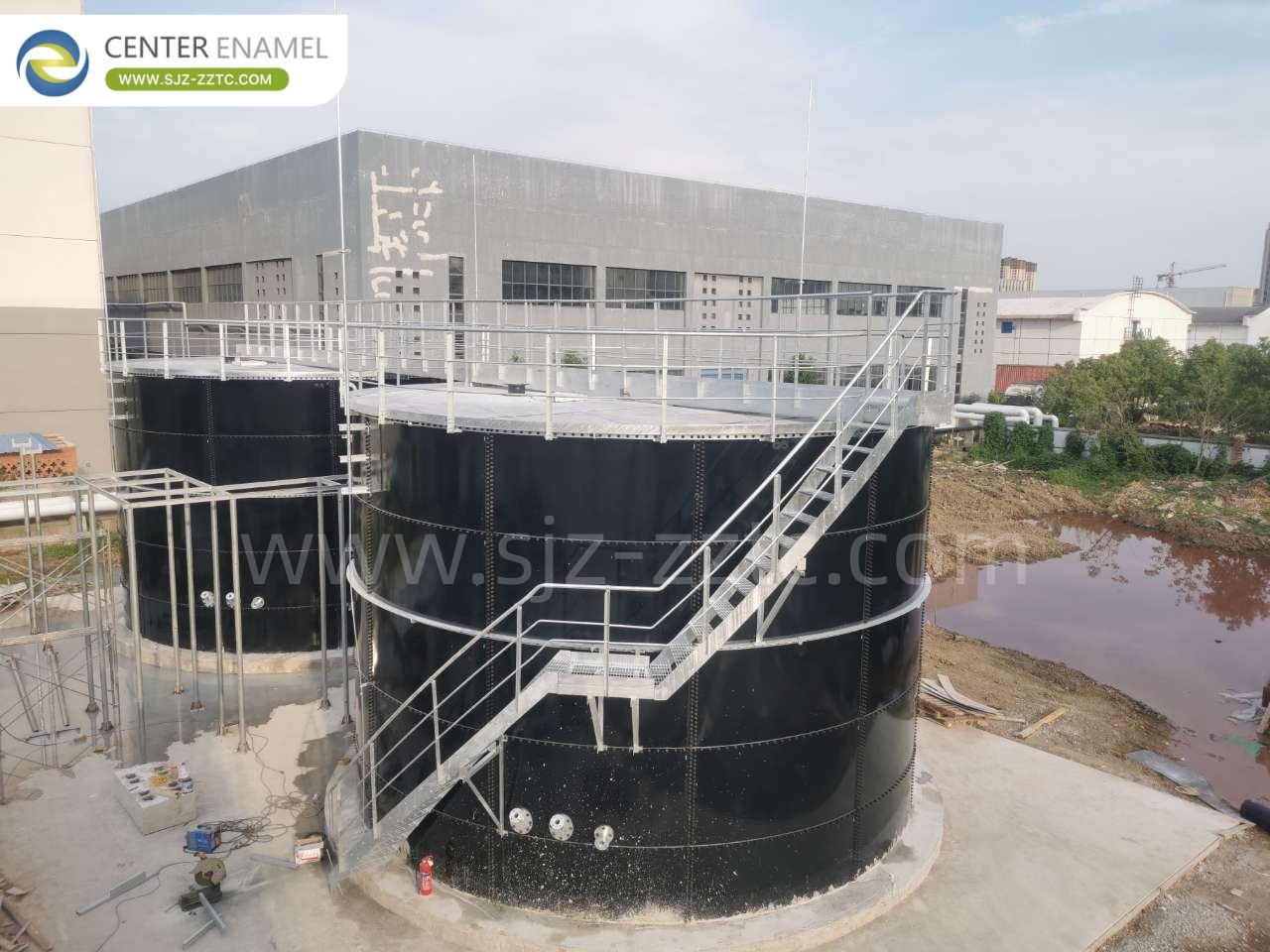
A hallmark of Center Enamel’s projects is the use of proprietary GFS Tanks (Glass-Fused-to-Steel):


Corrosion Resistance: The inert glass surface is immune to the organic acids and CIP chemicals that often corrode traditional concrete or carbon steel tanks.


Earthquake Resilience: The modular, bolted design of GFS Tanks offers better structural flexibility and seismic resistance compared to rigid concrete structures.


Speed of Installation: Modular assembly significantly shortens construction cycles, reducing the labor costs and operational disruptions for Japanese plants.


Compact Scalability: The vertical design and modular nature allow for expansion even in space-limited environments.


Why Center Enamel is the Preferred EPC Contractor

Choosing Center Enamel ensures a seamless, "one-stop" experience:


Global Technical Expertise: With projects in over 100 countries, we adapt international innovations to local Japanese requirements.


Customized Engineering: Every system is precision-engineered to meet specific effluent profiles and local Add-on Standards.


Turnkey Integration: We provide the entire technology suite, including GFS Tanks, double-membrane gas holders, and advanced automated controls.


Proven Success: Case Studies

Case 1: Mali Beverage Wastewater Treatment Project

Tank Dimensions: Φ6.11 × 4.8 m (H) — 1 Unit

Total Volume: 141 m³ — 1 Unit

Installation Date: 2024


Case 2: Guinea Beverage Wastewater Treatment Project

Tank Dimensions: Φ6.11 × 4.8 m (H) — 1 Unit

Total Volume: 141 m³ — 1 Unit

Installation Date: 2024


In the competitive landscape of Japan’s beverage industry, sustainability is no longer optional—it is a core component of operational excellence. As an expert EPC Contractor, Center Enamel offers more than just compliance; we offer a transformation. By combining advanced anaerobic technologies like IC and UASB with the unparalleled durability of GFS Tanks, we enable Japanese manufacturers to convert high-strength wastewater into a clean energy resource. This approach not only meets the stringent demands of the Ministry of the Environment but also reduces operational costs and enhances a company’s ESG profile.

With our global project experience and commitment to customized engineering, Center Enamel provides the technical foundation for a "Sound Material-Cycle" within the beverage sector. Choosing Center Enamel means investing in a resilient, future-proof solution that turns an environmental liability into a sustainable, profitable asset, ensuring that Japanese beverage production remains world-class in both quality and environmental stewardship.


このプロダクトについてのより多くの細部を知りたいと思いなさい
あなたの照会の細部を入れなさい。
同じようなプロダクト
Shijiazhuang Zhengzhong Technology Co., Ltd
sales@cectank.com
86-20-34061629
フリ商店301号室 シンガング西11号線 ハイズー地区 広州 広東県
メッセージを残しなさい
*メール
*メッセージ
送りなさい
中国 良質 鋼タンク に 溶かさ れ た ガラス 提供者 著作権 2016-2026 cectanks.com . 複製権所有。
メッセージを送信する