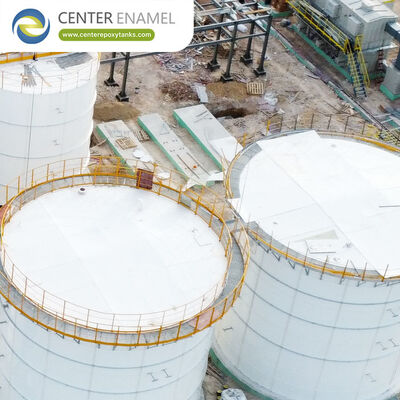
FBE Mineral Storage Tanks: The 2026 Engineering Standard for High-Wear Dry Bulk and Aggregate Silos

プロダクト細部
起源の場所: 中国
ブランド名: CEC TANKS
証明: ISO 9001:2008, AWWA D103 , OSHA , BSCI
モデル番号: w201691123005
支払及び船積みの言葉
最小注文数量: 1セット
価格: $5000~$20000 one set
パッケージの詳細: 2つのスチールプレートの間のPEポリフォーム。木製のパレットと木製の箱
受渡し時間: 預金を受け取ってから0〜60日後
支払条件: LC、T/T
供給の能力: 月60セット

詳細情報

起源の場所 中国 ブランド名 CEC TANKS
証明 ISO 9001:2008, AWWA D103 , OSHA , BSCI モデル番号 w201691123005
鋼板の厚さ: 3mm~12mm、タンク構造による 腐食の完全性: 素晴らしい
耐薬品性: 素晴らしい 容量: 20 m3〜18,000 m3
寿命: 30年以上 透過性: ガス /液体不浸透性
ハイライト:

FBE mineral storage tanks with warranty

,

high-wear dry bulk silos

,

fusion bonded epoxy aggregate silos

製品説明

FBE Mineral Storage Tanks: The 2026 Engineering Standard for High-Wear Dry Bulk and Aggregate Silos

In the mining, metallurgy, and power utility sectors, storing dry bulk minerals, aggregates, and raw ores presents intense structural challenges. Materials such as cement, fly ash, bauxite, iron ore, gypsum, and calcium carbonate are highly dense, heavy, and extremely abrasive during high-velocity pneumatic filling and gravity-driven loading cycles. Furthermore, many minerals are hygroscopic (moisture-sensitive), meaning any environmental sealing failure will result in rapid material caking, product spoilage, and severe structural blockages.

As of 2026, Fusion Bonded Epoxy (FBE) bolted steel silos—frequently engineered using Rolled, Tapered Panel (RTP) structural frameworks—have established themselves as the global design standard for bulk mineral storage. By combining the high tensile strength and structural flexibility of carbon steel with an advanced, factory-cross-linked polymer shell, FBE tanks offer unmatched abrasion resistance and structural life-safety reliability.


1. What is an FBE Mineral Storage Tank?

An FBE mineral tank (or silo) is a modular, bolted containment structure built from premium carbon steel panels that are factory-coated with a high-performance thermoset epoxy resin.

Unlike traditional field-applied liquid paints that are prone to scratching and uneven thickness, the Fusion Bonded Epoxy process is executed under strict factory quality control. Carbon steel plates are grit-blasted to a near-white finish (Sa 2.5 / SSPC-SP10), pre-heated to temperatures between 180°C and 230°C, and electrostatically sprayed with dry polymer powder. The powder melts, flows, and chemically cross-links inside an automated curing oven to create a high-density, tough barrier permanently bonded to the steel substrate. This creates a highly resilient interior lining engineered to withstand continuous friction, impact, and material weight.

2. Technical Performance: Defeating Impact and Abrasive Wear

Mineral silos face harsh mechanical parameters that differ drastically from liquid water storage. FBE technology handles these aggressive dry bulk forces through several critical design metrics:

Superior Abrasion Resistance and Hardness

During pneumatic filling or truck-discharge cycles, mineral particulates impact the silo walls at high velocities. Standard liquid epoxies or polyurethane paint systems easily score, peel, and strip off, exposing raw steel to atmospheric oxidation. FBE features a tough, highly scratch-resistant molecular structure designed specifically for dry bulk friction. For extremely high-wear zones, such as the lower hopper or intake deflector plates, FBE works seamlessly alongside localized wear liners or sacrificial abrasion plates.

Flexibility and Impact Resilience Over Glass Linings

While vitreous glass linings (Glass-Fused-to-Steel) offer exceptional hardness, they are inherently brittle and can spall, chip, or micro-fracture when subjected to heavy mechanical impacts—such as large ore chunks striking a wall, structural vibrations from heavy-duty bin activators, or seismic loading shifts. FBE is a flexible thermoset polymer that flexes dynamically alongside the steel panel, providing superior chip and shatter resistance under intense physical shock.

Advanced "Edge Wrap" and Bolt Hole Protection

Because bolted mineral silos undergo continuous dynamic expansion and contraction cycles, structural joint integrity is paramount. FBE utilizes an electrostatic "powder-on-powder" application method that wraps completely around sharp panel edges and inside bolt holes. This eliminates the primary sites where crevice corrosion or structural rust typically initiates under packed material weight.

Mass Flow Promotion and Anti-Adhesion

Fine mineral powders (like fly ash or hydrated lime) are highly prone to "bridging" or "rat-holing" within a hopper cone. The glossy, ultra-smooth interior surface of an FBE tank reduces the wall friction coefficient. This smooth finish acts as a natural flow-promoter, discouraging powder accumulation along the silo walls and ensuring a predictable mass-flow discharge pattern.

3. Comparison Matrix: FBE vs. Reinforced Concrete

Technical Performance Feature FBE Bolted Steel Silo Reinforced Concrete Silo
Impact & Shatter Resistance Superior (Flexible Thermoset) Moderate
Wall Friction Coefficient Low (Promotes product flow) High (Porous, traps powders)
Installation Speed Very Fast (Weeks via ground jacks) Slow (Months of pouring/curing)
Field Repairability Easy (Liquid touch-up kits) Difficult
Modular Scalability Yes (Panels can be added to scale) No
Total Structural Capital (CAPEX) Most Cost-Effective High (Heavy foundation required)

4. Engineering Design Standards and Dry Bulk Compliance

To satisfy strict global mining criteria and pass rigorous EPC bidding screens (such as those managed by international mining houses and power producers), premium FBE mineral tanks—such as those manufactured by global leaders like Center Enamel (Shijiazhuang Zhengzhong Technology) and industry-certified partners—comply with the following international codes:

  1. AWWA D103-19 (Section 12.6): The global benchmark standard for factory-coated bolted carbon steel storage structures, verifying calculations against hoop stress, dynamic dry bulk pressure profiles, and seismic loading.

  2. ISO 28765:2016: Governing the high-performance coating thickness, quality testing, and zero-discontinuity parameters for industrial bolted containment.

  3. ASCE 7-22 / Eurocode 3 (Part 4-1): Specific structural design criteria for silos, ensuring the modular panels calculate accurately for high-density asymmetric loads, internal vacuum pressures during rapid discharge, and external wind loads up to 250 km/h.

  4. ISO 9001 Factory Quality Control: Ensuring every panel undergoes a high-voltage electronic Holiday Test (typically $geq 1100text{V}$) to verify a 100% pinhole-free barrier before flat-packing.

5. Strategic Applications Across the Mineral Supply Chain

FBE dry bulk structures serve as critical storage nodes across multiple industrial sectors:

  • Mining and Ore Dressing: Storing processed mineral concentrates, crushed ore tailing reserves, barite, bentonite, and kaolin clay prior to transport or refining.

  • Cement Terminals & Ready-Mix Plants: Serving as high-capacity bulk cement storage silos. The modular bolted panels allow these silos to be easily containerized, shipped worldwide, and built rapidly in remote development areas.

  • Flue Gas Desulfurization (FGD) Loops: Holding bulk limestone or powdered limestone stocks utilized in environmental scrubbers within coal-fired power utilities.

  • Fly Ash & Bottom Ash Balancing: Managing the dry capture and holding of ash byproducts from power plant boilers before commercial reuse in concrete manufacturing.


Maximizing Dry Bulk Infrastructure ROI

For mining engineers, cement plant operators, and industrial infrastructure EPC contractors looking to optimize Return on Investment (ROI), the FBE bolted steel mineral silo is the definitive asset choice for 2026. By utilizing a modular, top-down assembly method with synchronized hydraulic jacking systems, these silos are erected entirely from ground level. This eliminates the need for high-altitude scaffolding, crane rentals, or certified field welders, reducing installation timelines by up to 60%. By eliminating the heavy foundation and long curing liabilities of concrete, and providing a flexible, fracture-resistant alternative to glass linings, FBE technology ensures safe, continuous, and low-maintenance dry bulk mineral management for an operational lifespan exceeding 30 years.

Are you currently designing a mining storage facility, planning a cement terminal expansion, or upgrading an FGD chemical dosing system, and would you like a detailed technical proposal including structural payload calculations, shear testing data, and engineering drawings for your mineral volume?


このプロダクトについてのより多くの細部を知りたいと思いなさい
あなたの照会の細部を入れなさい。
Shijiazhuang Zhengzhong Technology Co., Ltd
sales@cectank.com
86-20-34061629
フリ商店301号室 シンガング西11号線 ハイズー地区 広州 広東県
メッセージを残しなさい
*メール
*メッセージ
送りなさい
中国 良質 鋼タンク に 溶かさ れ た ガラス 提供者 著作権 2016-2026 cectanks.com . 複製権所有。
メッセージを送信する