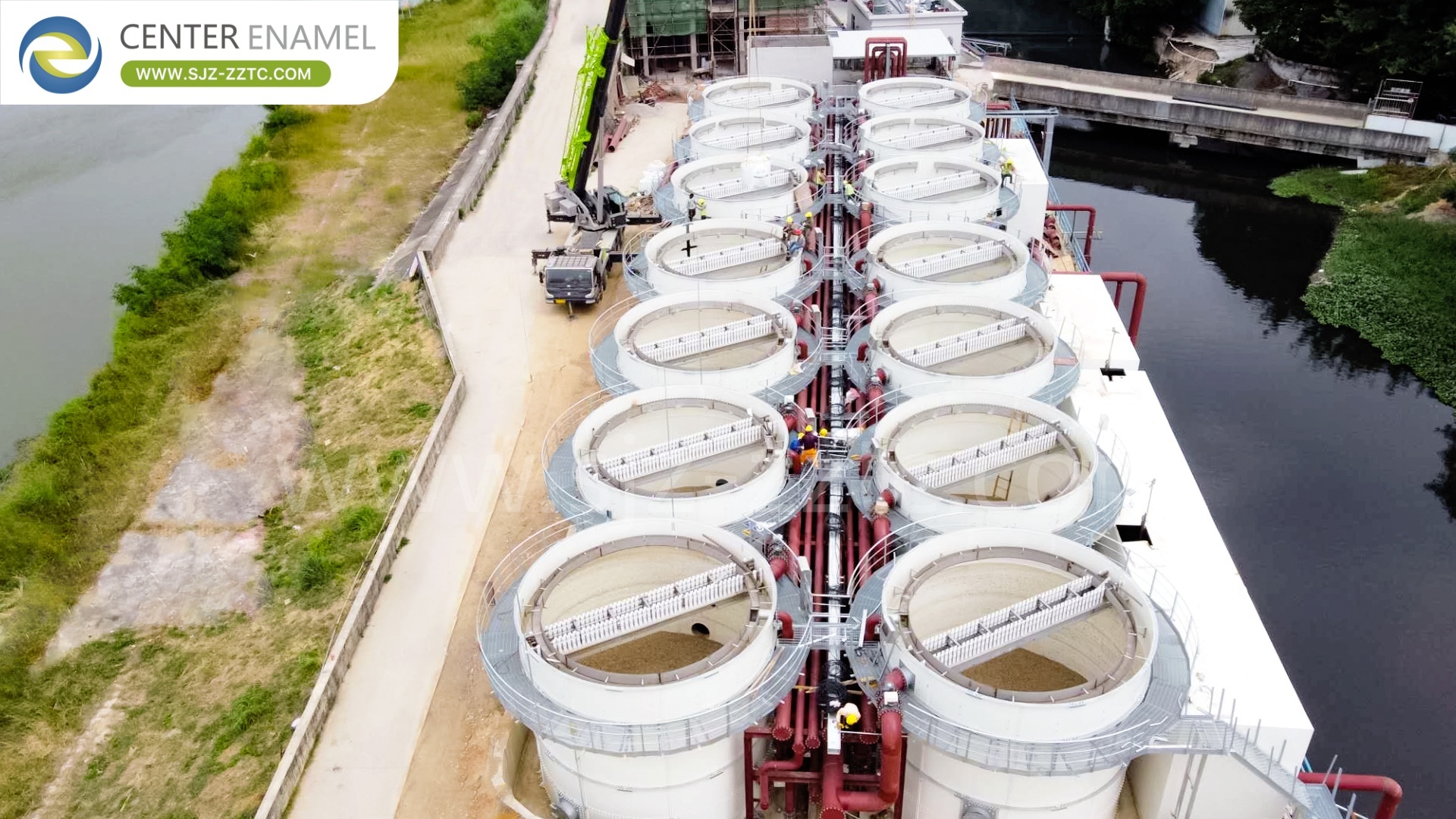
High-Efficiency Anaerobic Processing for Japan Silage Straw Biogas Projects

プロダクト細部
起源の場所: 中国
ブランド名: CEC TANKS
証明: ISO 9001:2008, AWWA D103 , OSHA , BSCI
モデル番号: W
支払及び船積みの言葉
最小注文数量: 1セット
価格: $5000~$20000 one set
パッケージの詳細: 各 2 枚の鋼板の間に PE ポリフォーム;木製パレットと木製
受渡し時間: 入金受領後10-30日
支払条件: LC、T/T
供給の能力: 月60セット

詳細情報

起源の場所 中国 ブランド名 CEC TANKS
証明 ISO 9001:2008, AWWA D103 , OSHA , BSCI モデル番号 W
タンク本体色: ダークグリーン / カスタマイズ可能 腐食の完全性: 素晴らしい
鋼板の厚さ: 3mm~12mm、タンク構造による 耐薬品性: 素晴らしい
パネルのサイズ: 2.4M * 1.2M お手入れ簡単: 滑らか、光沢、不活性、癒着防止
ハイライト:

Japan silage straw biogas system

,

anaerobic wastewater treatment project

,

high-efficiency biogas processing equipment

製品説明

High-Efficiency Anaerobic Processing for Japan Silage Straw Biogas Projects

This article evaluates the strategic integration of large-scale silage straw processing within Japan's evolving green energy sector, demonstrating how implementing specialized biological process configurations with premium engineering vessels can successfully accelerate regional circular bio-economy goals. Silage straw refers to high-moisture agricultural crop residues—primarily from corn, rice straw, or forage crops—that are finely chopped, compacted, and preserved through controlled lactic acid anaerobic fermentation (ensiling). This natural preservation method effectively locks in the soluble sugars and organic matrix of the plant, transforming seasonal agricultural residues into an exceptional, nutrient-dense feedstock optimized for high-yield, continuous bioenergy generation.


Overview and Market Applications of Silage Straw in Japan

Silage straw cultivation, systematic collection, and large-scale resource utilization are rapidly gaining traction across Japan, strongly supported by the nation’s highly advanced agricultural frameworks and optimized regional farming climate zones. As an exceptionally clean, carbon-dense, and structurally uniform organic residue resulting from intensive annual multi-crop farming, silage straw serves as a reliable and secure feedstock for continuous anaerobic facilities. Beyond its legacy application as high-quality winter forage for Japan's premium dairy and beef livestock sectors, silage straw is transitioning into a high-value industrial commodity. Its massive lignocellulosic content makes it an exceptional candidate for advanced bio-based manufacturing, organic structural fiber composites, and decentralized waste-to-energy power plants. This empowers rural prefectures to substitute high-cost energy imports while transforming routine farming byproducts into profitable, high-value clean energy.


How Silage Straw Transforms into Biogas: The Biological Sequence

The biological conversion of industrial silage straw into methane-rich biogas occurs through anaerobic digestion—a finely tuned biological sequence where specialized bacterial cultures break down complex organic matter in a completely oxygen-free environment. This complex biochemical pathway operates through four sequential stages:


Hydrolysis: Complex cellulose fibers and robust lignocellulosic structures within the chopped silage straw are enzymatically broken down into soluble simple sugars.


Acidogenesis: Acid-producing microorganisms ferment these simple organic compounds into volatile fatty acids (VFAs) and alcohols.


Acetogenesis: Specialized acetogenic bacteria subsequently convert the accumulated VFAs into acetic acid, carbon dioxide, and pure hydrogen.


Methanogenesis: In the critical final stage, highly sensitive methanogenic archaea metabolize these dynamic precursors, outputting a high-yield biogas stream ready for continuous energy generation.


Multi-Dimensional Strategic Benefits for Japan's Green Transition

Implementing advanced silage straw biogas solutions delivers multiple long-term advantages across Japan’s localized agricultural and ecological landscapes:


Strict Agricultural Waste and Odor Control: Localized anaerobic containment and processing of surplus straw prevent natural field rot and open-air decomposition, aligning perfectly with Japan's rigorous environmental preservation standards and reducing localized biological odors.


Decentralized Power and Local Grid Resilience: Converting massive volumes of crop waste into base-load electricity supports Japan's regional microgrid initiatives, providing a stable, weather-independent renewable energy source that enhances community disaster resilience.


Production of High-Grade Organic Bio-fertilizers: The spent digestate byproduct from the bioreactor serves as an excellent, nutrient-dense organic fertilizer that allows commercial farms to replace costly synthetic chemical inputs, support organic farming mandates, and advance soil health.


Core Anaerobic Technologies: CSTR, UASB, USR, and IC

Selecting an appropriate biological process configuration is vital to address the fluctuating organic loads and high suspended solids typical of agricultural biomass streams. Center Enamel offers specialized expertise across four distinct anaerobic processes:


CSTR (Continuous Stirred Tank Reactor): The CSTR process represents the optimal choice for managing waste streams with high solid fractions or thick organic pulps like chopped silage straw. Its powerful mechanical mixing systems maintain a completely uniform biological environment, successfully suppressing surface scum formation and ensuring consistent, high-rate organic conversion.


UASB (Upflow Anaerobic Sludge Blanket): A highly responsive liquid-phase process ideally suited for pre-settled agricultural wastewater. Liquid waste moves upward through a dense, self-assembled granular sludge bed, rapidly degrading soluble COD within a space-saving plant configuration.


USR (Upflow Solids Reactor): Specifically configured to manage waste streams with high total suspended solids (SS). This configuration works by retaining particulate organic matter within the digestion zone for an extended period, ensuring thorough breakdown and superior biogas production.


IC (Internal Circulation) Reactor: A highly efficient, next-generation deep reactor featuring an integrated dual-stage internal circulation loop driven by self-generated biogas buoyancy. It excels at managing exceptionally heavy volumetric organic loading rates, making it suitable for high-capacity industrial facilities.


Advantages of GFS Tanks in Japan Silage Straw Biogas Projects

The decades-long performance of any industrial waste-to-energy development depends directly on the structural reliability of its main containment vessels. Center Enamel incorporates its world-class Glass-Fused-to-Steel (GFS) tanks to provide unparalleled durability under Japan's distinct oceanic climate and strict seismic design criteria:


Exceptional Chemical and Corrosion Shielding: The anaerobic degradation of organic biomass generates harsh organic acids and highly corrosive hydrogen sulfide ($H_2S$) gas. The inert glass shell fused onto the steel panel cores creates a robust, impermeable layer that completely isolates the steel from chemical wear, outperforming traditional concrete or welded steel.


Superior Seismic and Typhoon Resilience: Japan is subject to frequent earthquakes and severe coastal humidity. The modular, bolted construction of GFS tanks provides exceptional structural flexibility, allowing the vessels to better withstand physical weathering, localized shifting, and thermal expansion without developing structural cracks.


Rapid On-Site Erection and Minimal Labor Demands: Prefabricated completely within a controlled factory environment, GFS tanks are delivered modularly to the project site and erected swiftly using specialized hydraulic jacks. This eliminates long concrete curing phases and lowers localized labor requirements, ensuring quick project commissioning.


Optimized Land Footprint and Modular Scalability: Space can be highly restricted in commercial layouts. The vertical tank configuration provides vast volumetric storage while occupying minimal land area, making it easy to seamlessly add matching modular units as incoming biomass processing volumes expand over time.


Why Partner with Center Enamel for Biogas Projects

Choosing Center Enamel as your specialized EPC contractor offers extensive operational and technological advantages:


Turnkey Engineering Packages: We supply an all-inclusive project lifecycle service, spanning custom biological process design, premium tank manufacturing, precision equipment sourcing, rapid field installation, and smart automation system commissioning.


Tailored Technical Solution Design: Understanding that biomass properties vary based on harvest cycles and processing scales, our expert engineers configure every anaerobic plant layout to precisely match local waste properties and regional environmental parameters.


Fully Integrated Equipment Suite: Beyond producing premium GFS tanks, we engineer and deploy crucial process components, such as double-membrane gas holders, tailored mixing systems, and advanced biogas purification units.


Extensive Global Project Track Record: With successfully commissioned storage and treatment systems in over 100 countries, Center Enamel effectively aligns global waste-to-energy innovations with local standards and strict environmental mandates.


Industry-Proven Project Case Studies

Center Enamel's global design capabilities and robust engineering standards are demonstrated through major international waste-to-energy installations:


Case1: Indonesia Biogas Project

Tank Application: Palm Oil Wastewater Treatment Plant

Tank Model: Ø19.86 × 8.4 m

Number of Tanks: 3 GFS Tanks

Installation: 7 personnel, 40 days

Installation Date: November 2009


Case2: Sweden Biogas Project

Tank Dimensions: φ19.11 × 19.2 m (H) — 1 Unit

Total Volume: 5,510 m³

Completion Date: 2024


Developing durable, modern infrastructure is essential as Japan intensifies its dedication to green economic growth, strict agricultural discharge compliance, and sustainable resource recovery. Constructing specialized silage straw processing biogas projects based on advanced anaerobic solutions, the flexible CSTR process, and high-grade GFS tanks provides commercial agricultural producers and municipal authorities with a highly reliable, lucrative method to resolve environmental waste challenges. By forming a strategic partnership with Center Enamel, municipal and industrial stakeholders secure direct access to world-class process engineering, field-proven anaerobic configurations, and resilient containment systems. This comprehensive approach easily meets stringent local environmental mandates, greatly lowers daily waste disposal expenditures, and yields a dependable source of clean energy—ensuring Japan's long-term environmental protection and renewable energy targets are successfully achieved.


このプロダクトについてのより多くの細部を知りたいと思いなさい
あなたの照会の細部を入れなさい。
Shijiazhuang Zhengzhong Technology Co., Ltd
sales@cectank.com
86-20-34061629
フリ商店301号室 シンガング西11号線 ハイズー地区 広州 広東県
メッセージを残しなさい
*メール
*メッセージ
送りなさい
中国 良質 鋼タンク に 溶かさ れ た ガラス 提供者 著作権 2016-2026 cectanks.com . 複製権所有。
メッセージを送信する