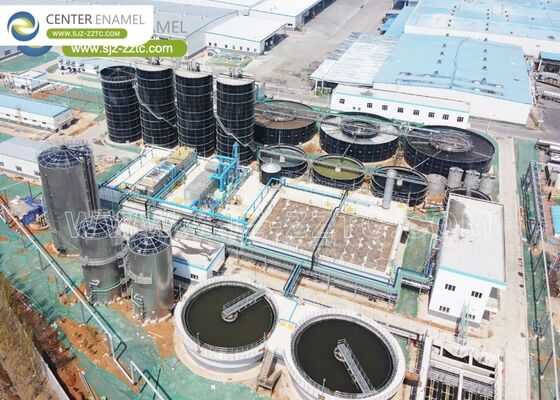
Comprehensive Anaerobic Solutions for Pig Farm Wastewater in Malaysia:Using GFS Tanks and CSTR Process

プロダクト細部
起源の場所: 中国
ブランド名: CEC TANKS
証明: ISO 9001:2008, AWWA D103 , OSHA , BSCI
モデル番号: W
支払及び船積みの言葉
最小注文数量: 1セット
価格: $5000~$20000 one set
パッケージの詳細: 各 2 枚の鋼板の間に PE ポリフォーム;木製パレットと木製
受渡し時間: 入金受領後10-30日
支払条件: LC、T/T
供給の能力: 月60セット

詳細情報

起源の場所 中国 ブランド名 CEC TANKS
証明 ISO 9001:2008, AWWA D103 , OSHA , BSCI モデル番号 W
タンク本体色: ダークグリーン / カスタマイズ可能 腐食の完全性: 素晴らしい
鋼板の厚さ: 3mm~12mm、タンク構造による 耐薬品性: 素晴らしい
パネルのサイズ: 2.4M * 1.2M お手入れ簡単: 滑らか、光沢、不活性、癒着防止
ハイライト:

GFS tanks for pig farm wastewater

,

CSTR process wastewater treatment

,

anaerobic solutions Malaysia pig farms

製品説明

Comprehensive Anaerobic Solutions for Pig Farm Wastewater in Malaysia:Using GFS Tanks and CSTR Process

This article provides an in-depth exploration of advanced anaerobic digestion solutions designed specifically for livestock farming, focusing on how modern engineering transforms organic waste into valuable clean energy.

Understanding Pig Farm Wastewater Sources and Treatment Challenges in Malaysia

Malaysia has a thriving livestock sector, particularly centered around swine production, which generates vast quantities of high-strength organic effluent daily. Pig farm wastewater is characterized by extremely high chemical oxygen demand (COD), biological oxygen demand (BOD), suspended solids, and ammoniacal nitrogen, originating primarily from animal manure, urine, and daily facility washing routines. Managing this effluent presents severe environmental and operational challenges for local farmers. Untreated or partially treated livestock wastewater poses significant risks to local water bodies through eutrophication, foul odors, and greenhouse gas emissions. Traditional lagoon systems often require massive land areas, suffer from poor odor control, and fail to meet stringent environmental discharge standards set by regulatory authorities, making high-efficiency enclosed treatment systems an absolute necessity.

How Pig Farm Wastewater is Converted into Biogas

The transformation of livestock effluent into renewable energy relies on biological stabilization under anaerobic conditions. Complex organic compounds present in the slurry are broken down sequentially by specialized groups of microorganisms through hydrolysis, acidogenesis, acetogenesis, and methanogenesis. Initially, insoluble macromolecules are converted into soluble monomers by extracellular enzymes. Acid-forming bacteria then transform these monomers into volatile fatty acids. Acetogenic bacteria convert these acids into acetate, hydrogen, and carbon dioxide, which are finally converted into methane and carbon dioxide by strict anaerobic methanogenic archaea. This biological conversion not only removes the vast majority of organic pollutants and stabilizes the waste stream but also captures methane-rich biogas, turning a hazardous environmental liability into a valuable on-site energy asset.

Center Enamel Provides Professional Design Solutions for Biogas Projects

Designing an efficient anaerobic treatment facility for livestock waste requires deep technical expertise, robust engineering standards, and rigorous adherence to international manufacturing codes. Center Enamel leverages decades of global engineering experience to deliver tailored, high-performance biogas project solutions optimized for tropical climates and specific operational scales. From initial site evaluation and mass balance calculations to structural engineering and process piping layout, our engineering team ensures every project achieves maximum biogas yield and structural longevity. We integrate advanced corrosion-resistant containment technologies with automated process control systems, delivering turnkey solutions that comply with major international standards such as AWWA D103, ISO 9001, NSF/ANSI 61, and ISO 28765, ensuring seamless integration into existing farming infrastructure.

Core CSTR Technology for High-Efficiency Fermentation

At the heart of the anaerobic digestion system is the Continuous Stirred-Tank Reactor, which serves as the core processing unit for organic waste stabilization and biogas generation. The CSTR technology ensures that fermentation raw materials and specialized anaerobic microorganisms are thoroughly mixed within a sealed reactor vessel. Equipped with a robust mechanical stirring device, paddle agitators, agitator shaft, and shell-breaking devices, the reactor maintains a uniform temperature and continuous or semi-continuous feeding regime. This prevents scum formation and thermal stratification, allowing high-concentration organic wastewater with suspended solids to undergo complete anaerobic digestion. The enclosed design features safety mechanisms such as positive and negative pressure protectors and specialized gas pipelines, guaranteeing safe, stable, and highly efficient methane production.

Advanced Containment with GFS Tanks and Double Membrane Roofs

To withstand the highly corrosive nature of livestock slurry and biogas production, primary digestion and storage structures require superior metallurgical and coating technologies. Center Enamel utilizes premium Glass-Fused-to-Steel (GFS) tanks, manufactured by fusing high-grade steel sheets with specially formulated inorganic glass frit at high temperatures between 820°C and 930°C. This dual-coating structure (2C2F) combines the mechanical strength and flexibility of steel with the exceptional chemical and corrosion resistance of glass, eliminating the need for periodic repainting. To cap these containment structures, Integrated Double Membrane Roofs provide an optimal solution for biogas collection and odor control. Featuring a durable outer membrane for weather protection and an inner membrane for gas storage, this configuration optimizes vertical space, reduces capital expenditure on external gas holders, and ensures absolute gas-tightness.

Comprehensive Storage Tank and Roof Options for Modern Biogas Facilities

Different stages of an anaerobic digestion plant demand specialized containment structures and cover configurations tailored to specific operational functions. Center Enamel manufactures a diverse range of alternative storage tanks, including Galvanized Steel Tanks treated with durable protective zinc coatings, Fusion Bonded Epoxy (FBE) Tanks developed in partnership with AkzoNobel for exceptional barrier protection, and Stainless Steel Tanks (AISI 304/316) built for ultra-pure or extreme chemical environments. To complement these containment vessels, our comprehensive roof solutions include Aluminum Geodesic Dome Roofs offering expansive clear-span capability and advanced corrosion resistance, Glass-Fused-to-Steel Roofs designed for pressurized structures and odor containment, Aluminum Alloy Trough Deck Roofs for non-airtight rainwater protection, Stainless Steel Roofs for harsh industrial conditions, and FRP Roofs available in dome or flat configurations suitable for open-top storage and agricultural water applications.

Essential Supporting Equipment for Integrated Biogas Ecosystems

A fully functional anaerobic digestion facility requires a synchronized suite of auxiliary equipment to prepare feedstock, purify gas, and manage digestate effectively. Mechanical Bar Screens first remove large debris and coarse solids from incoming raw effluent. Homogenization Tanks balance influent variations before entering the CSTR reactor. Solid-Liquid Separators process the fermented digestate into fibrous digestate organic fertilizer and liquid digestate, which can be safely applied to agricultural land or directed to Black Film Ponds. Gas Holders store purified methane prior to utilization. Dehydration and Desulfurization Tanks remove moisture and corrosive hydrogen sulfide gas, protecting downstream equipment. Booster Fans maintain optimal gas pressure, while Flowmeters monitor volumetric output. Finally, Torch Systems safely flare excess gas, Boilers provide thermal energy for reactor heating, and Biogas Generators or CNG systems convert the purified fuel into electricity or vehicle-grade compressed natural gas.

One-Stop Solution Provider for Turnkey Biogas Project Execution

Center Enamel operates as a comprehensive, one-stop solution provider, streamlining the entire lifecycle of industrial and agricultural biogas installations. Our extensive manufacturing base covers 150,000 square meters with an annual production capacity exceeding 250,000 sheets, supporting global clients across more than 100 countries. Our core business scope encompasses complete EPC (Engineering, Procurement, and Construction) services, proprietary Process Packages, and direct Equipment Supply. By managing every phase from civil engineering design and equipment fabrication to site installation, commissioning, and operator training, we minimize project risk and accelerate delivery schedules. Our rigorous quality control protocols and internationally recognized certifications guarantee that every agricultural waste-to-energy plant operates at peak efficiency, delivering long-term environmental and financial returns.

Conclusion

Transforming livestock effluent into clean renewable energy represents a vital step toward sustainable agricultural development. By integrating robust GFS containment vessels, advanced CSTR fermentation technology, and comprehensive gas utilization equipment, modern farms can successfully eliminate pollution hazards while generating valuable power and organic fertilizer.

Frequently Asked Questions

What makes GFS tanks superior to traditional concrete or welded painted tanks for livestock effluent storage?

Glass-Fused-to-Steel tanks offer exceptional resistance to chemical corrosion, abrasion, and aggressive organic acids generated during anaerobic digestion. Unlike concrete, which is prone to cracking and seepage, or painted steel, which requires frequent maintenance and repainting, GFS tanks are factory-engineered with a fused inorganic glass coating that guarantees a service life exceeding 30 years with minimal upkeep.

How does the mechanical stirring system inside the CSTR reactor enhance biogas production efficiency?

The mechanical agitation system, equipped with specialized paddles, agitator shafts, and shell-breaking devices, ensures continuous and uniform mixing of incoming livestock slurry with active anaerobic microorganisms. This prevents thermal stratification and floating crust formation, maximizes contact between bacteria and organic substrates, and significantly accelerates the rate of methane generation.

What maintenance protocols are required for the double membrane roof system in biogas plants?

Routine maintenance for double membrane roofs involves inspecting the air pressure control system between the inner and outer membranes, monitoring pressure relief valves, checking for any physical abrasions or weather-induced wear, and ensuring the blower units maintain correct inflation pressure to withstand local wind and snow loads effectively.

このプロダクトについてのより多くの細部を知りたいと思いなさい
あなたの照会の細部を入れなさい。
Shijiazhuang Zhengzhong Technology Co., Ltd
sales@cectank.com
86-20-34061629
フリ商店301号室 シンガング西11号線 ハイズー地区 広州 広東県
メッセージを残しなさい
*メール
*メッセージ
送りなさい
中国 良質 鋼タンク に 溶かさ れ た ガラス 提供者 著作権 2016-2026 cectanks.com . 複製権所有。
メッセージを送信する